A cartridge heater that arrives quickly but does not match the bore, heat load or voltage can delay a machine build more than a made-to-order element would. You will be able to calculate a defensible wattage, send a complete drawing-ready specification and judge whether a standard heater can meet your Pune delivery deadline.
Key takeaways
- Verify watt density in W/cm² or W/in² before comparing heaters.
- Calculate heat load instead of copying the old heater’s wattage.
- Send bore size, heated length, voltage, wattage, leads and tolerances.
- Inspect dimensions, resistance, insulation and sheath condition before installation.
Measure watt density before you call a heater high-density
A heater is “high-density” only when its watt density is stated: electrical power divided by the heated sheath area touching the bore or process medium. Use W/cm² or W/in², not the label alone.
A 1,000 W heater with a 12 mm diameter and 200 mm heated length has about 75.4 cm² of surface area, so its watt density is 13.3 W/cm².
The same wattage packed into a shorter heated length raises sheath temperature and can cause early failure, local boiling, deposits or poor temperature uniformity. There is no universal threshold that makes a cartridge high-density. Compare the actual figure with sheath temperature, operating temperature, voltage and the permissible bore fit.
This is why listings for high watt density heaters in pune and high density catridge heaters in pune are incomplete without those numbers.
1. Measure the drilled bore diameter and depth, then identify the cartridge’s diameter, heated length, unheated length and total length. A tight fit improves heat transfer; forcing an oversized cartridge damages the heater or the bore.
2. Calculate watt density using heated surface area only. For a round cartridge, area equals π × diameter × heated length; divide rated watts by that area.
3. Ask for sheath material, lead exit, voltage, operating temperature and wattage. For chemical liquids, check compatibility, sealing and immersion design instead of installing a standard cartridge directly.
Calculate the heat load instead of copying the old wattage
A 10 kg steel mould heated from 25°C to 180°C in 20 minutes needs about 1,100 W before losses: 10 × 0.50 kJ/kg·K × 155 K ÷ 1,200 s = 0.646 kW, not 1.1? Correct calculation is 0.646 kW. Add heat conducted into plates, radiation, wiring and the machine frame, then apply a control margin.
If those losses total 300 W and you use a 20% margin, specify about 1.14 kW.
Use this calculation for each heat-up zone:
- Qmaterial = mass × specific heat × temperature rise
- Qrate = Qmaterial ÷ required heat-up time
- Qtotal = Qrate + estimated heat losses
- Heater rating = Qtotal × 1.10 to 1.25
Use specific heat in kJ/kg·K, mass in kilograms, temperature rise in °C and time in seconds. Convert the result to watts. Include the mould, die, plates, oil or solution being heated; exclude insulated parts that will not rise to the target temperature.
Do not solve a slow heat-up by simply fitting one oversized element. Several shorter cartridges can distribute heat across a die and match separate sensor zones, while excessive local wattage raises sheath temperature and shortens life. Check the required power against the bore area and permissible watt density before ordering.
Search terms such as high density cartridge heaters for available in Pune do not replace this calculation, because “high density” is not a fixed wattage class.
Give the heater maker a fit-ready specification
Send a dimensioned drawing, not “one high-density heater.” For custom cartridge heaters in Pune, state the drilled-hole diameter and depth, including the maker’s recommended bore tolerance. A loose or oval hole creates an air gap, raises thermal resistance and produces sheath hot spots.
- Sheath form: round diameter or square/rectangular dimensions; sheath material; heated length, unheated length and total length.
- Hole data: measured diameter, depth, straightness, surface finish and clearance from the closed bottom. Confirm that the heater will not bottom out.
- Electrical rating: voltage, wattage, resistance tolerance and actual watt density in W/cm² or W/in² of heated sheath.
- Operating limits: target operating temperature, sheath-temperature limit and the control sensor’s position.
- Connection: lead exit location, lead length, insulation, terminal style, right-angle requirement and sealing.
- Order details: quantity, machine location, required dispatch date and whether each dimension is standard or custom.
Compare the proposed specification against the installation before approving it:
| Condition | Risk or consequence | Required action |
|---|---|---|
| Standard bore and straight hole | Consistent contact and heat transfer | Confirm recommended diameter and tolerance |
| Loose, oval or rough bore | Air gap, hot spots and early failure | Rework the hole or reduce heater rating |
| Humid-stored mineral-insulated heater | Lower insulation resistance at start-up | Megohm-test it and dry or bake out under controlled conditions |
Request the resistance and insulation-resistance test results with the dispatch documents. A heater that fits the hole but lacks those electrical limits is not fit-ready.
Choose the heater shape and density for the actual machine
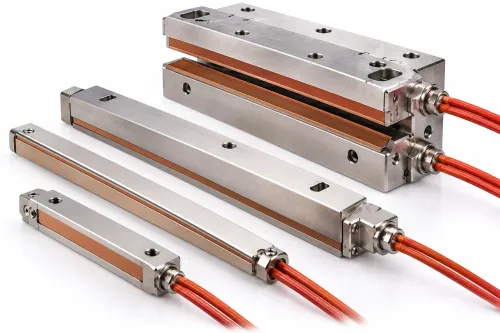
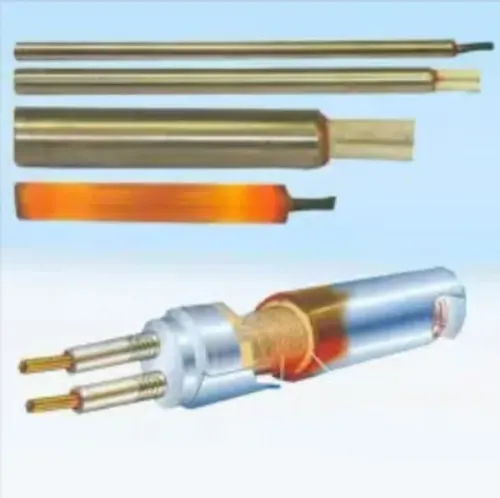
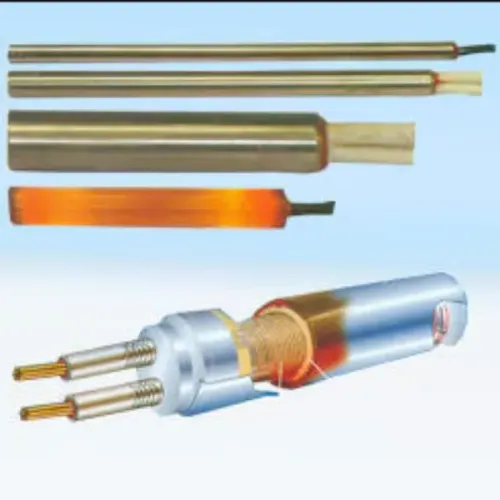
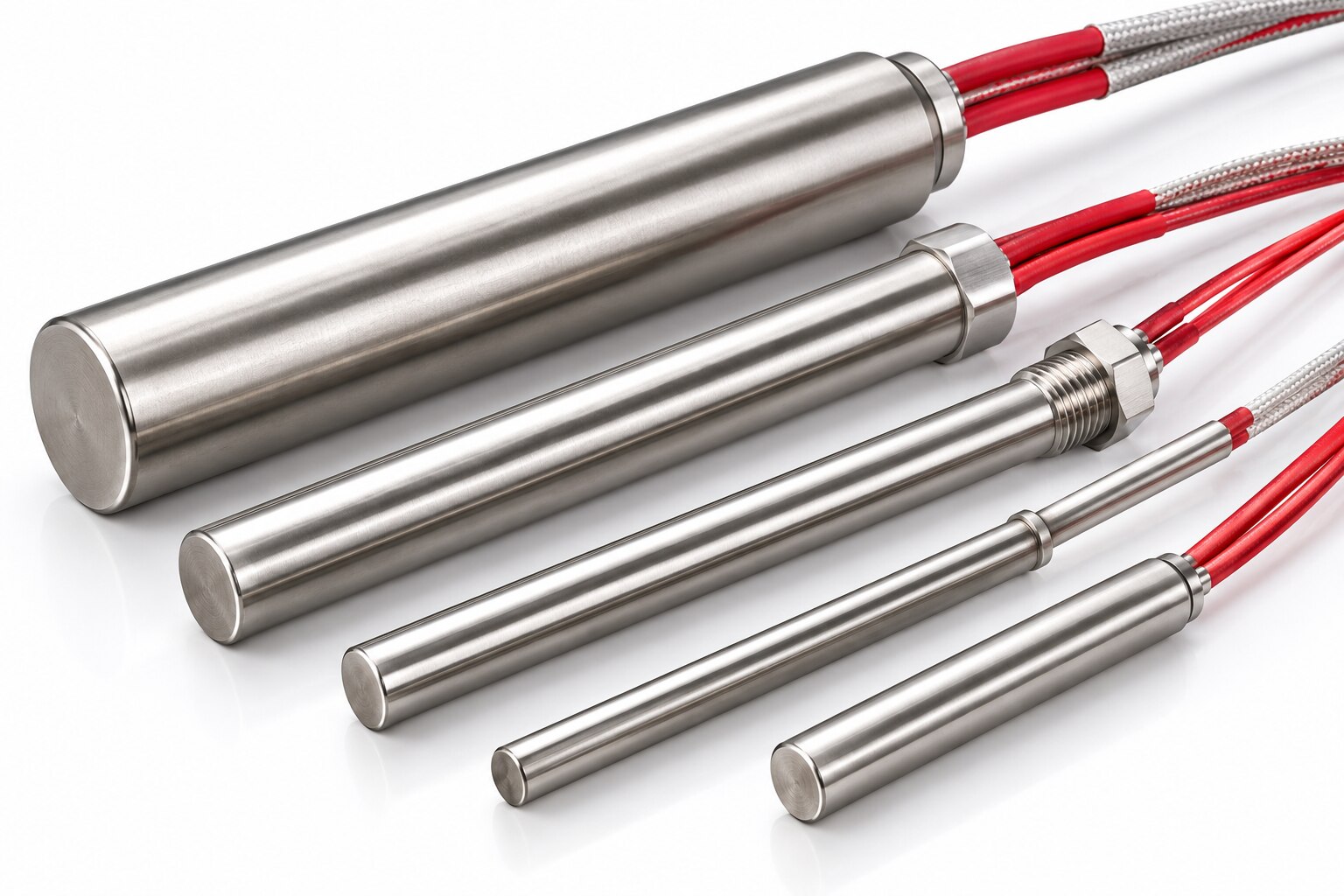
Use a round cartridge heater for a drilled circular bore in a die, mould, nozzle or platen. Specify the manufacturer’s bore diameter and tolerance; a loose or oval hole creates an air gap, hot spots and slow heat transfer. Do not force a nominal 10 mm heater into an undersized hole.
| Shape | Best fit | Main trade-off |
|---|---|---|
| Round | Deep cylindrical bores and replaceable heating zones | Needs close, straight bore contact |
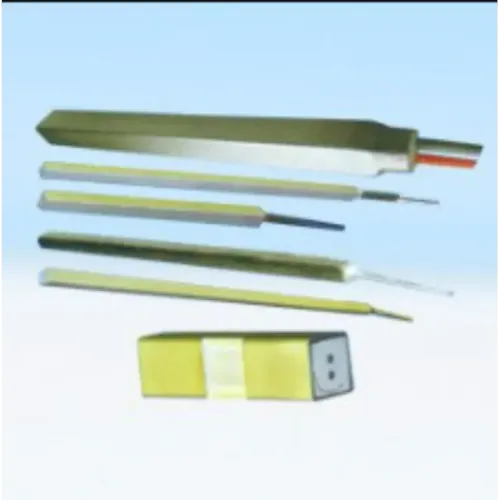
| Square | Slots requiring anti-rotation or a larger contact face | Harder machining and removal |
| Rectangular | Shallow grooves, narrow plates and limited radial space | Uneven contact if the slot is distorted |
Compare density using watts per square centimetre or watts per inch of heated sheath, not the label “high-density.” A 1,000 W heater with a short heated length has a higher surface load than a 1,000 W heater with a long heated length, and its sheath can run hotter.
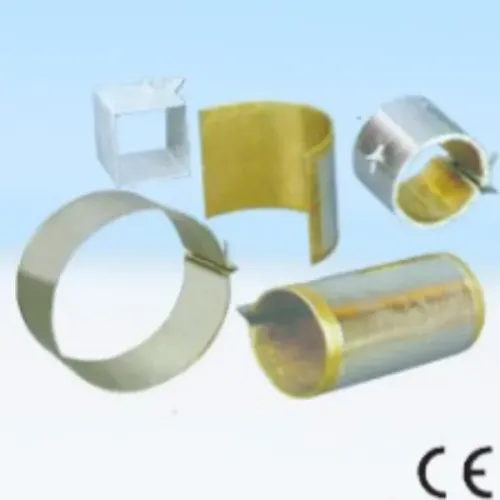
For high watt density heaters in Pune, compare watt density alongside sheath material, sheath temperature, operating temperature, bore fit and control-zone length. A band heater, tubular heater or cast-in heater may spread heat over a larger area at lower surface density; matching only total wattage can conceal a damaging hot spot.
Choose several shorter custom cartridge heaters in Pune when spacing, sensor location and independent zones matter more than one long element. For liquids or chemical solutions, do not use a bare cartridge by default; specify a sealed immersion assembly or thermowell and reduce sheath density to prevent local boiling and deposits.
Make fast Pune procurement a specification and inspection exercise
An “available” heater is suitable only when the supplier confirms the exact build, dispatch date and inspection results in writing. Stock status means little if the diameter, lead exit or wattage differs from your machine.
Send one complete enquiry, not the phrase “high density cartridge heaters for available in Pune” alone:
- Bore diameter, tolerance, depth and bottom clearance
- Sheath diameter or square dimensions, heated length, unheated length and total length
- Voltage, wattage, actual watt density in W/cm² or W/in²
- Sheath material, operating temperature and lead length
- Lead exit, terminal style, quantity and required delivery date
Request two dates: when the parts leave the Pune facility and when they arrive at your site. Ask the supplier to mark each dimension as stocked standard or made-to-order. A right-angle lead, thermocouple, distributed wattage, special sealing or nonstandard sheath can change a same-week supply into a production job.
Before installation, measure diameter, length, resistance and insulation resistance against the order. Check that the bore is straight and free from scale; an oval or oversized hole creates an air gap, hot spots and early failure.
Confirm the quoted watt density includes the heated sheath length, then match it to the permissible bore fit and sheath temperature.
For a cartridge heater manufacturer in Pune, ask Saket Enterprises 08048052723 to state these checks on the quotation. That separates high density catridge heaters in pune from genuinely fit-ready supply, whatever a listing for high watt density heaters in Pune claims.
Related products
 | High Density Cartridge Heater Product Details: Power(Watts) As per customer requirement Voltage As per customer requirement Fostered with a team of highly qualified professionals,... View product → |
 | Sealing Jaw Heaters Product Details: Power(Watts) As per customer requirement Voltage As per customer requirement Fostered with a team of highly qualified professionals,... View product → |
Frequently asked questions
How do you measure whether a cartridge heater is high-density?
Divide electrical power by the heated sheath area touching the bore or process medium, then state the result in W/cm² or W/in².
Why should you calculate heat load instead of copying the old wattage?
The old wattage may reflect a different material, cycle time, insulation level or operating temperature. Calculate the energy needed for the machine and its process first.
What information should you give a cartridge heater manufacturer?
Provide bore diameter, heater diameter, heated length, overall length, voltage, wattage, lead exit, lead length, operating temperature and fit tolerances.
How do you choose cartridge heater shape and watt density?
Match the diameter and length to the bore, then select watt density for the material, contact quality, temperature, duty cycle and available heat removal.
What should you inspect when buying cartridge heaters quickly in Pune?
Check dimensions, resistance, insulation resistance, sheath condition, lead attachment, marking and the supplied test documents before installation.
Keywords